The models, and the stack beneath them
DeepSeek, Qwen, GLM, Kimi: Chinese models now compete at the frontier — and win on price. We follow the releases, the licences, the chips they train on, and what each of them means for a European buyer.
-
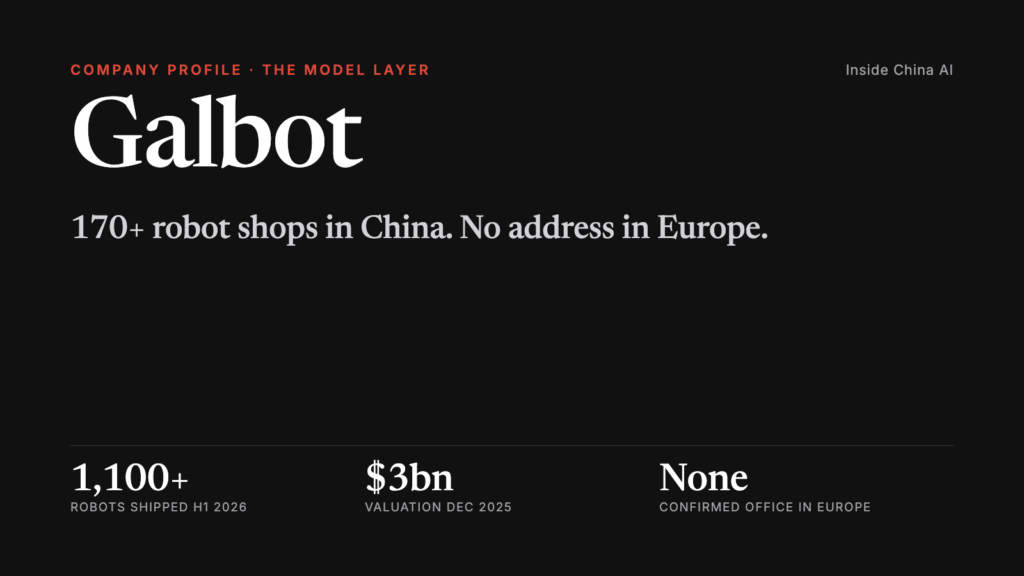
Galbot: China’s Robot Shopkeeper Is Everywhere at Home and Nowhere in Europe
In Lisbon, Galbot’s listed speakers are its robots. China’s most valuable unlisted humanoid company runs 170+ robot kiosks at home — and has no confirmed customer, office or partner in Europe.
Latest
All in this section →-
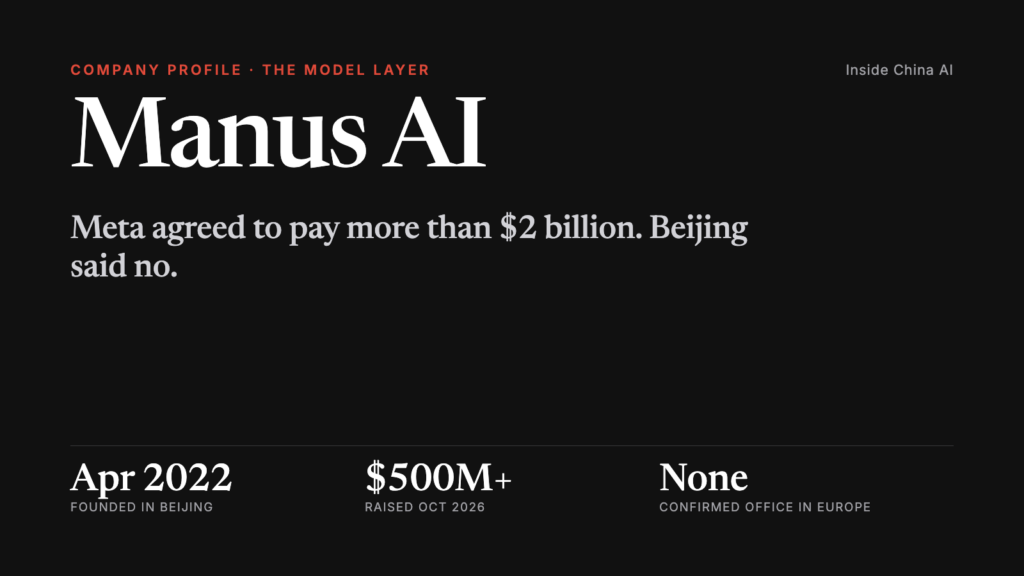
Manus AI: The Agent Company Beijing Would Not Let Go
Meta agreed to pay $2 billion. Beijing said no. Six months later Manus raised $500 million on its own —…
-

ModelBest: The Chinese Model That Arrives in a Samsung Box
Fifty million downloads, a Samsung pre-install deal, a STAR Market IPO in preparation — and no European office, customer or…
-

The Number Alibaba Didn’t Publish
Alibaba called the Zhenwu V900 China’s most powerful AI chip and published no FLOPS, no process node and no memory…
-

Microsoft, Amazon and Google Are Talking to Moonshot AI — and the Ask Is 30 Per Cent
Reuters reports Moonshot wants up to 30% of revenue from hosting Kimi K3 on Azure, AWS and Google Cloud. It…
-

Seedance, Explained: The TikTok Company’s Video AI That Makes Money While the West Demos
Half of ByteDance’s cloud model revenue, four months after launch. What Seedance is, why China monetises AI video first, and…
-

China’s AI Just Raised Prices — and It’s Still Winning the Price War
DeepSeek hiked API prices up to 12x this week and still costs a fraction of US frontier models. Bloomberg asks…
Model families
The eight families a European reader will meet — who builds them, and whether the weights are open.
Five trends we track
Efficiency as a design principle
Mixture-of-experts, cheaper reinforcement learning, smaller clusters: what began as a response to export controls is now a cost advantage.
Open weights as ecosystem strategy
Open models build developer communities and set de facto standards — and route those developers to the cloud behind them.
Multimodality and video
China’s internet is video-first. Its labs ship video generation that has an audience, and revenue, on day one.
Reasoning and agents
From R1’s step-by-step reasoning to agents that buy, book and order inside super-apps.
Content rules travel with the model
Chinese models are subject to Chinese content requirements. What that means outside China is a question we keep examining.