The Lisbon China Report: Open by Design, Built as Hardware
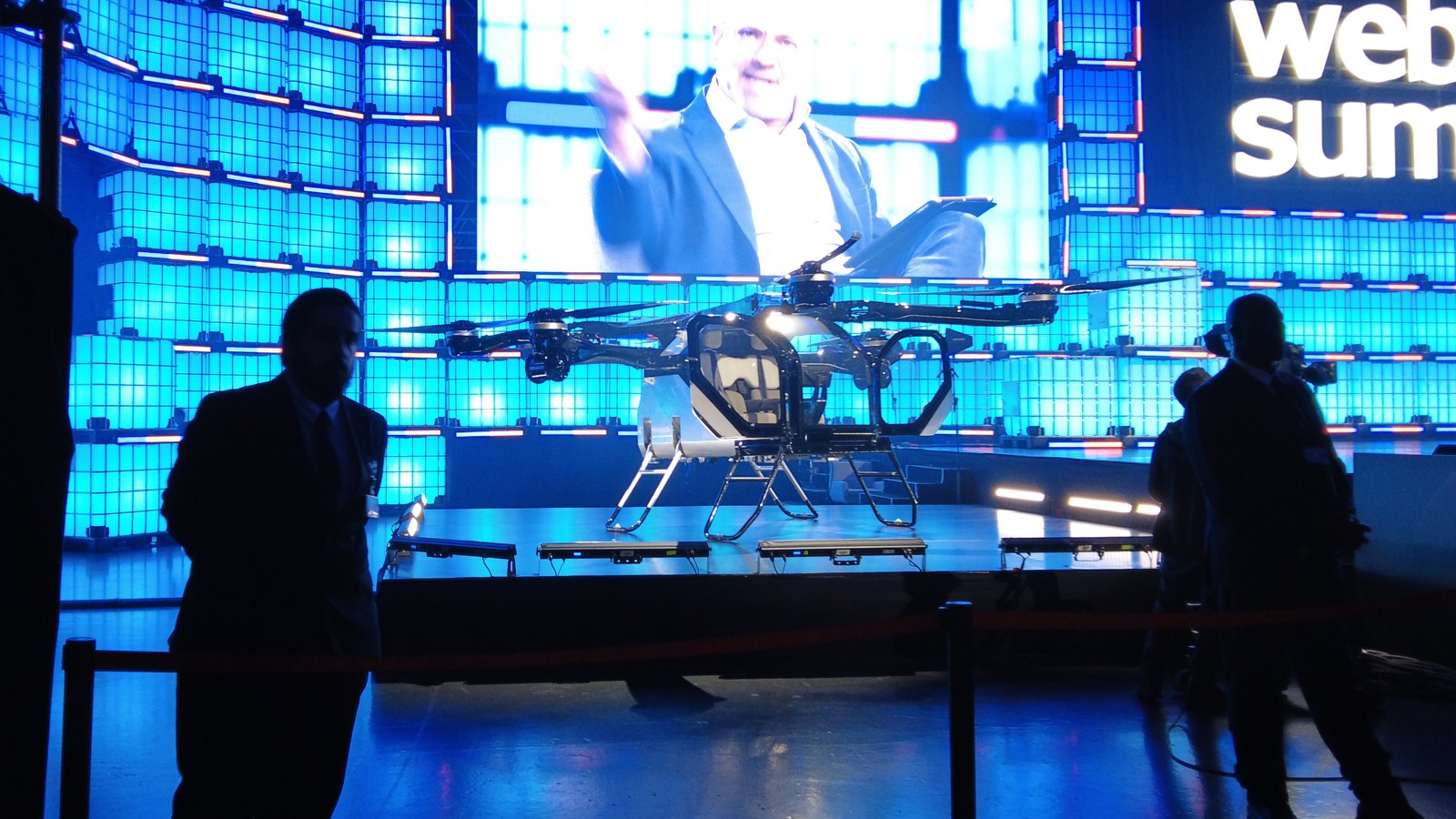
Xpeng Aridge’s flying car on Centre Stage, Web Summit Lisbon. Photo: Inside China AI
Web Summit 2026 brought the biggest Chinese line-up the conference has ever had. Over three days in Lisbon, China’s AI companies delivered two messages: openness as a principle, and hardware you can touch. Here is what we saw and heard on site, what it means for Europe — and what we could not verify.
In brief
■ Five things we took home from Lisbon
- China came in force. Web Summit billed it as “the biggest line-up of Chinese tech ever”. On the main stage, China’s AI labs did not ask for trust. They argued for a model of openness.
- Open is a strategy, not a gift. MiniMax called openness “not a choice” but “a design”; ModelBest said open models are safer because safety is built in, “like airbags and brakes”. Both rely on a global developer community to improve their models for free.
- Smaller is the new bigger. ModelBest’s pitch was efficiency: the same intelligence in ever-smaller models that run on phones, in cars and in robots, without a cloud bill.
- China brings hardware. Galbot described robots that have been running a pharmacy warehouse for two years; Xpeng Aridge put a flying car on Centre Stage and called Xpeng a “physical AI company”. On Thursday, Rokid and OMOWAY recast “Made in China” as innovation and brands. The US voices on stage talked about AI that improves itself.
- Europe is still looking for its role. Speakers from Berlin, Geneva and Siemens said Europe will not win on models but can win on applications, industrial AI and data sovereignty. China’s message to Europe, from a Beijing think tank, was: engage “on equal terms” — or face “double hardball”.
The setting
■ China on Europe’s biggest tech stage

On the opening day, Web Summit’s host promised the audience “the biggest line-up of Chinese tech ever”, because “without it, the global conversation is badly out of balance”.
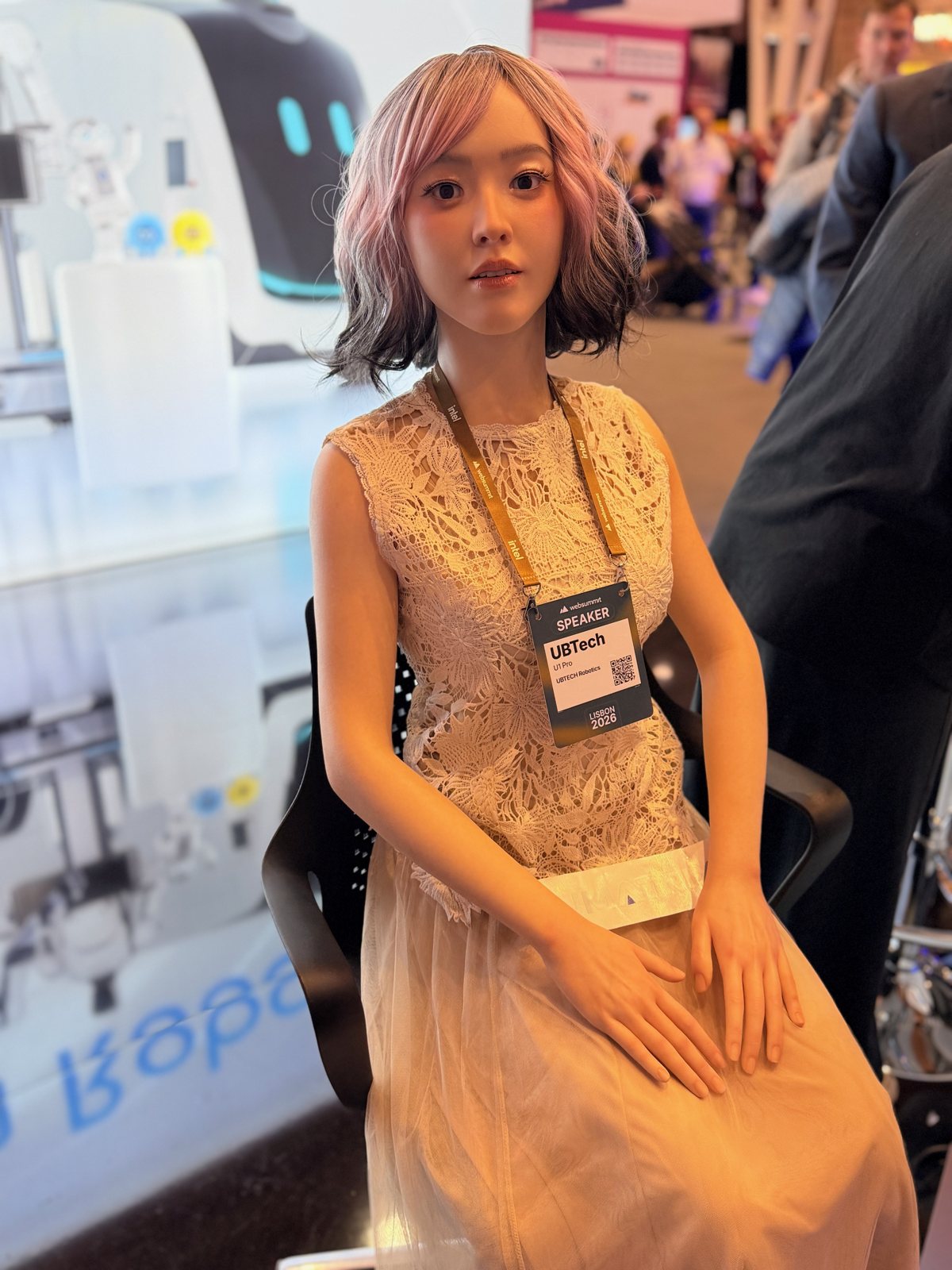
What followed over the week was a rare sight in Europe: Chinese founders, chief scientists and executives explaining themselves to a European audience in their own words — MiniMax and ModelBest on open models, Galbot and UBTech with humanoid robots, Xpeng Aridge with a flying car, and a Beijing think tank on geopolitics.
My own impression from the audience was mixed. In the hall, China often felt foreign. Many listeners did not seem to know how Chinese open models differ from American ones, or what “open” actually means when a Chinese lab says it. That gap is the reason this report exists: Europe will have to make decisions about Chinese AI — as buyers, regulators and competitors — and it cannot make them well without understanding what is on offer.
Theme 1 · Open models
■ “Not a choice, a design”
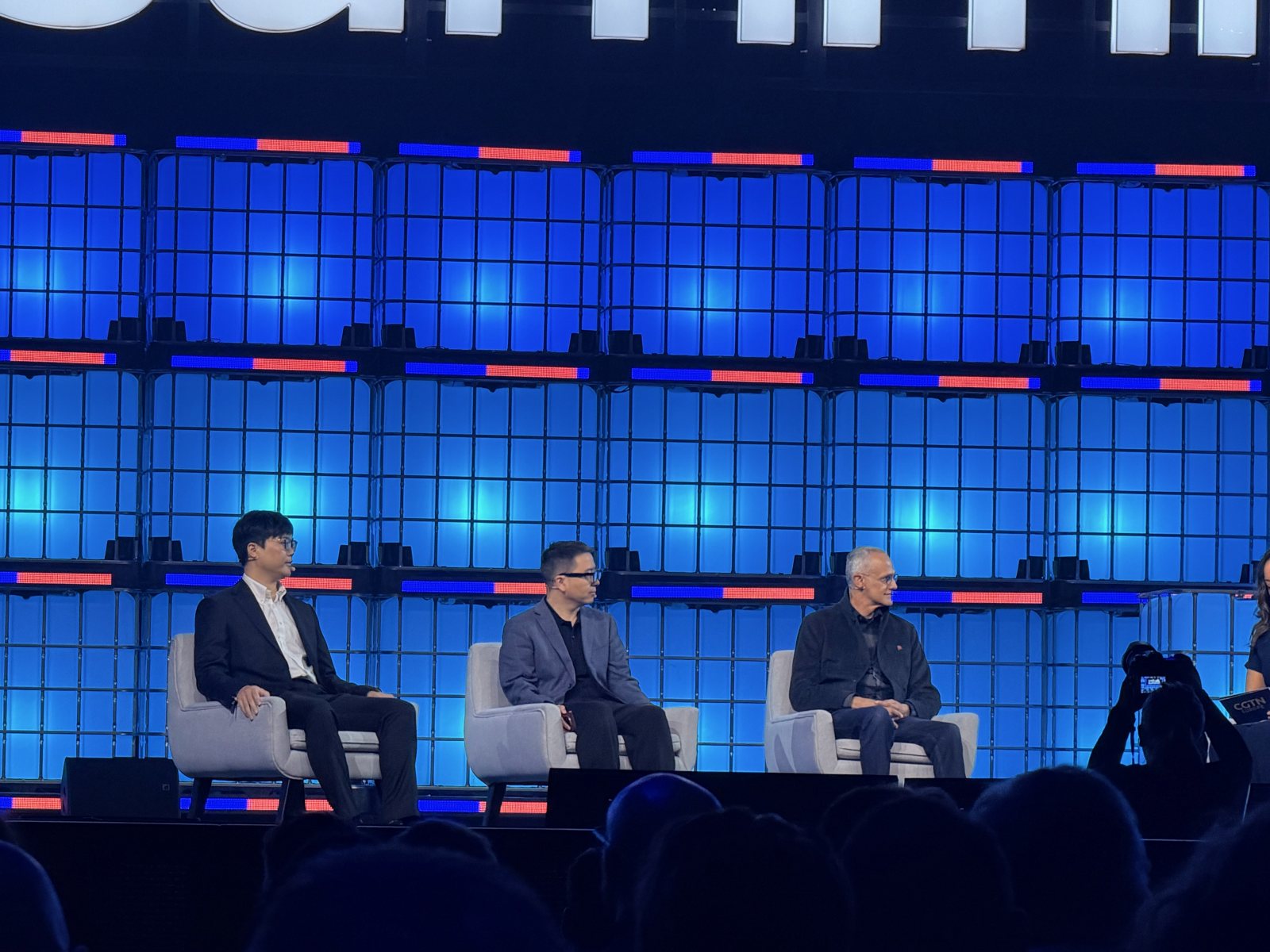
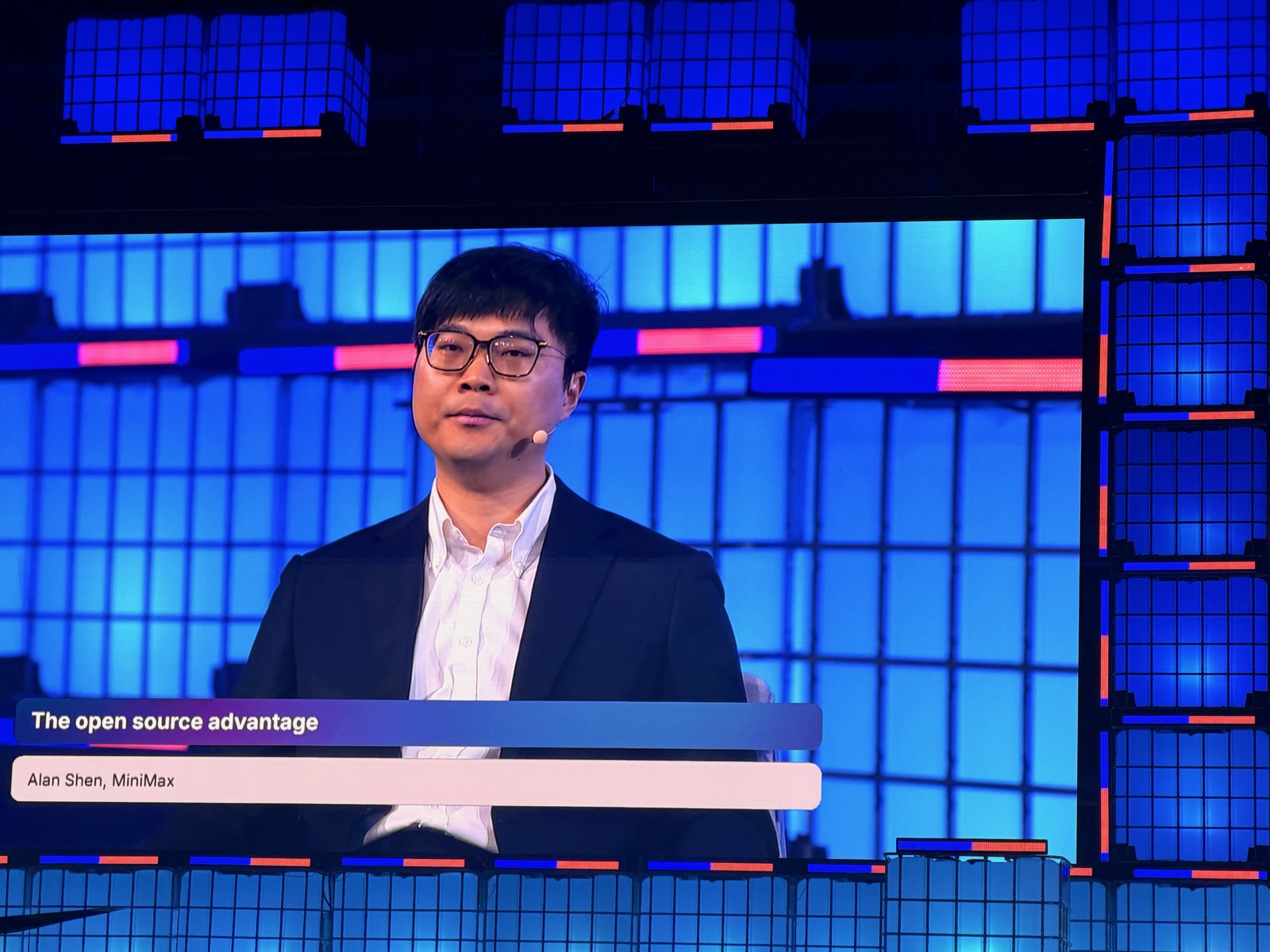
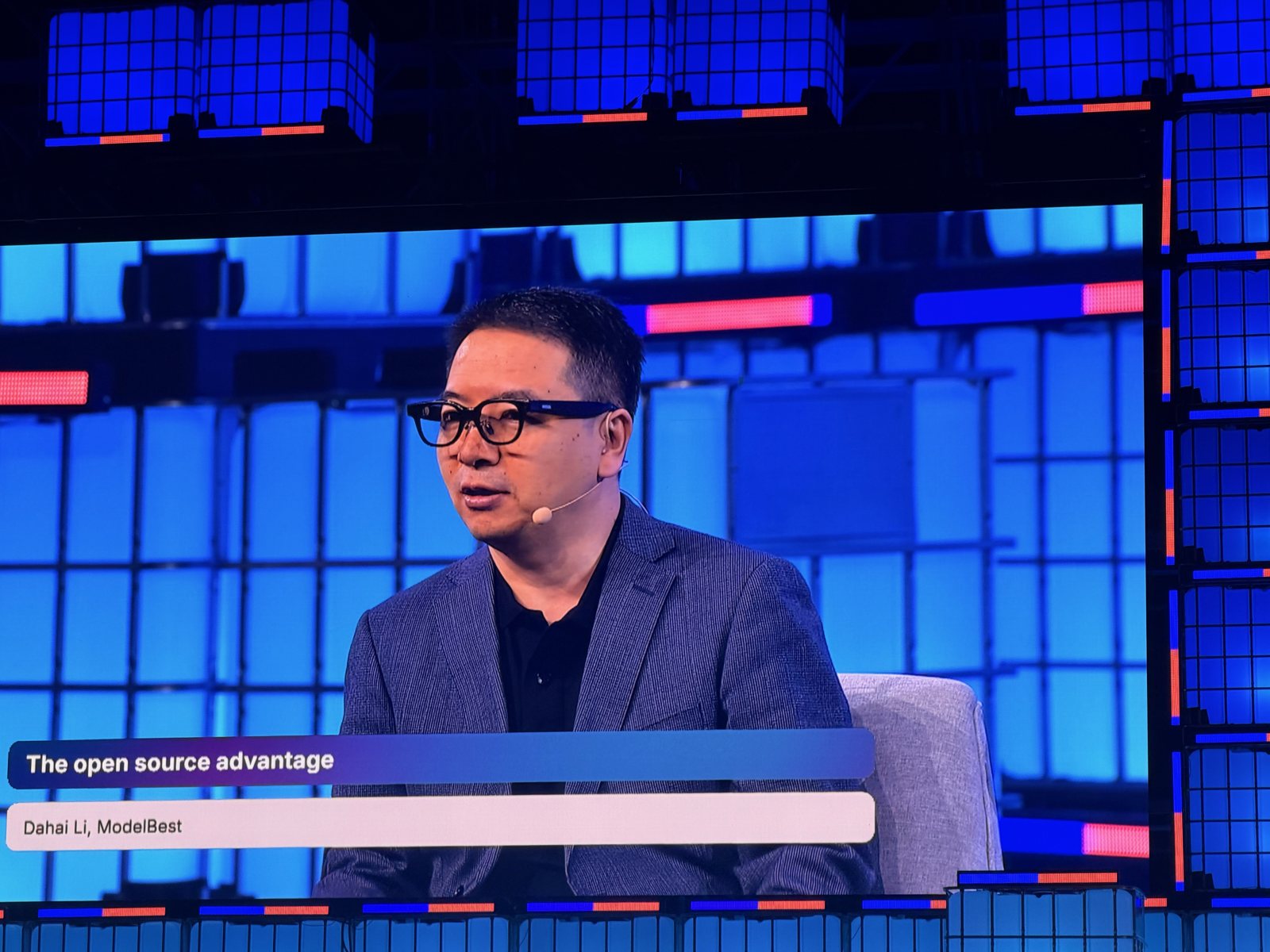
The clearest Chinese message of the week came on Centre Stage in a panel called “The open source advantage”. MiniMax and ModelBest, two of China’s leading model makers, made the case that openness is not charity but the core of their strategy.
“We have been open since day one, so that is not a choice, it’s actually a design.”
Alan Shen, MiniMax
Shen described the developer community as a co-developer: letting outsiders post-train the models is “one of the best possible feedback loop[s]”, he said, because the community does things the company’s own engineers could not have thought of. He also said that, according to OpenRouter usage statistics, open models have had more usage than closed ones over the past half year — a claim based on one platform’s data, not on the whole market.
Asked how to balance open access against misuse, ModelBest’s chief executive Dahai Li reached for a car:
“Once a car leaves the factory, the automaker cannot control how someone drives it … we build airbags and brakes right into a vehicle.”
Dahai Li, ModelBest
Li said ModelBest cleans its training data and trains its models to refuse dangerous requests, and argued that “making models open actually makes them safer”.
The counterpoint from Silicon Valley

Earlier on the same stage, Richard Socher — founder of You.com and co-founder of the new lab Recursive — treated China’s open models as the benchmark to beat. Recursive built its model Flint in three and a half months, he said, and it is “better in its category than any of the other open-source Chinese models”, naming Alibaba’s Qwen. That is his own claim and has not been independently tested.
Socher played down the risks of AI that improves itself by comparing it with the internet, which carries harmful content without anyone slowing the internet down. When the moderator raised the prospect of “some sort of Chinese honeypot situation”, he said Recursive would be careful about who gets access. In his closing remarks — according to our live notes; our recording had ended — he said the great, more efficient models would come from the “Western world”, with audible emphasis on Western.
Theme 2 · Efficiency
■ Smaller models, closer to the user
In his own talk on Stage 13, “Beyond scale: Why the future of AI is efficient”, Dahai Li laid out ModelBest’s thesis. “Scale moved AI forward, but scale also created a new problem,” he began.
“More capability with fewer parameters. We call this the Densing Law. … For the same intelligence, model size drops fast. Roughly every 100 days, the intelligence density doubles.”
Dahai Li, ModelBest, Stage 13
Li said ModelBest and Tsinghua University first described this pattern, published as a cover story in Nature Machine Intelligence in 2025. His conclusion: “Powerful intelligence no longer needs to stay in the cloud. It can run close to the user. It can run on phones, in cars, and inside robots.” He presented the latest MiniCPM model as running with about 3 GB of memory, and said the fully open-source MiniCPM family has been downloaded about 70 million times worldwide — a company figure; in August ModelBest gave 50 million.
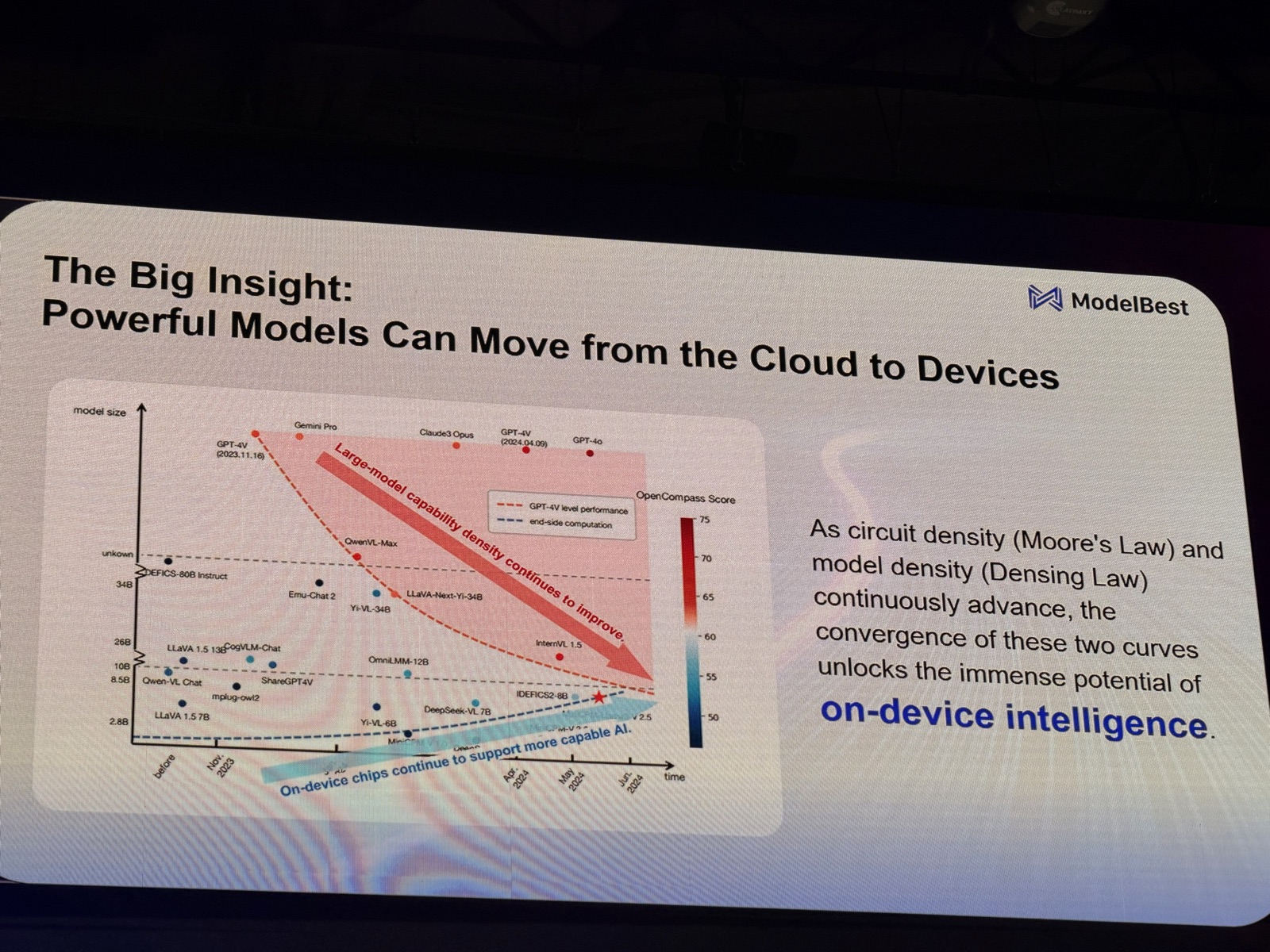
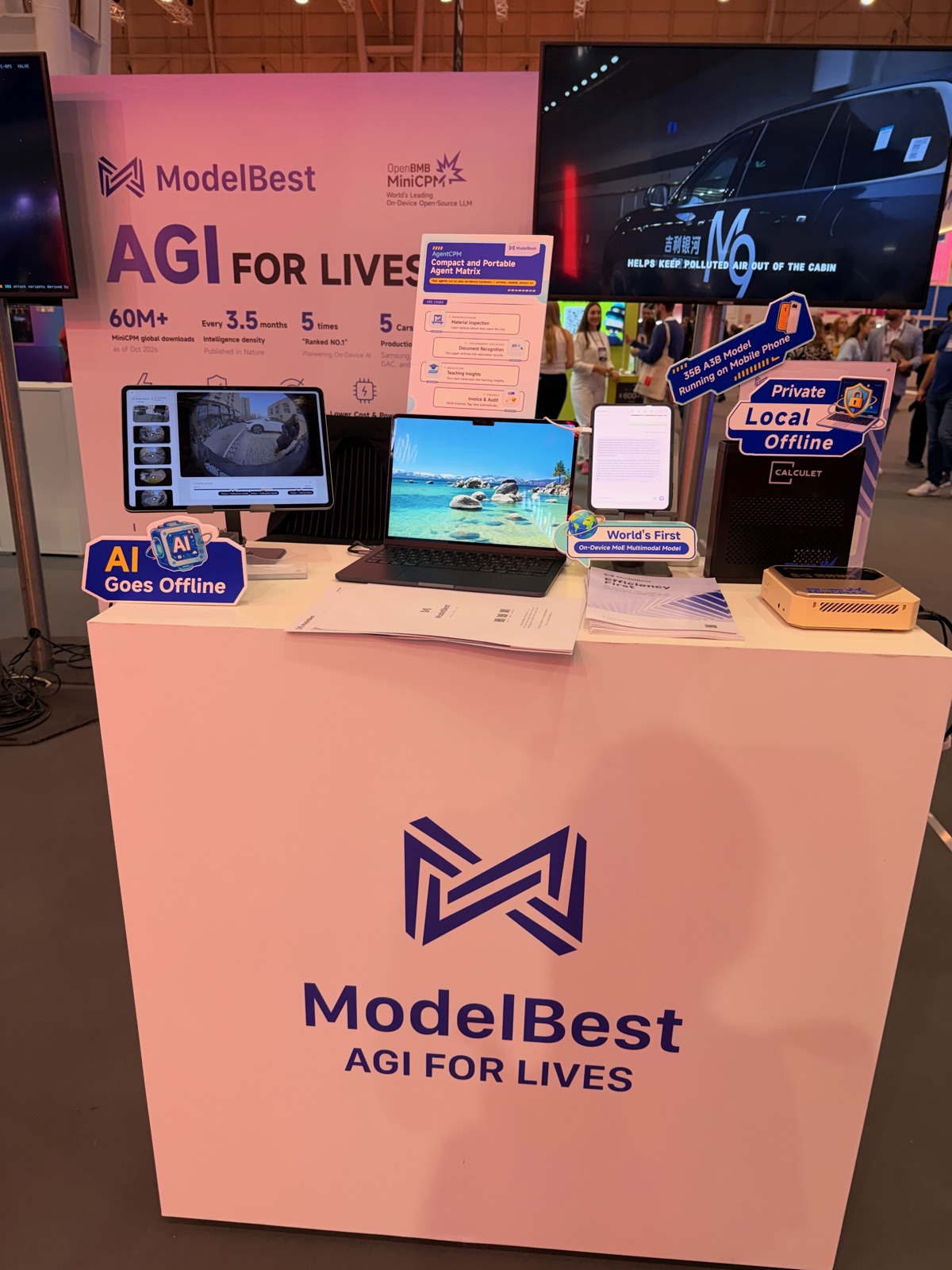
Li echoed Socher in one respect. “In the industrial age, machines began to build machines. In the AI age, AI can help build AI,” he said. The difference lies in the destination: where the US lab talks about ever more capable systems in the cloud, ModelBest wants the intelligence on the device in your pocket or your car.
Background: our profile “The Chinese model that arrives in a Samsung box” (17 October 2026).
Theme 3 · Physical AI
■ China brings hardware
If the open-model debate was about software, the show floor was about bodies. Chinese companies brought robots and machines to Lisbon — and described them as products in use, not demos.
Galbot: “not just a demo”

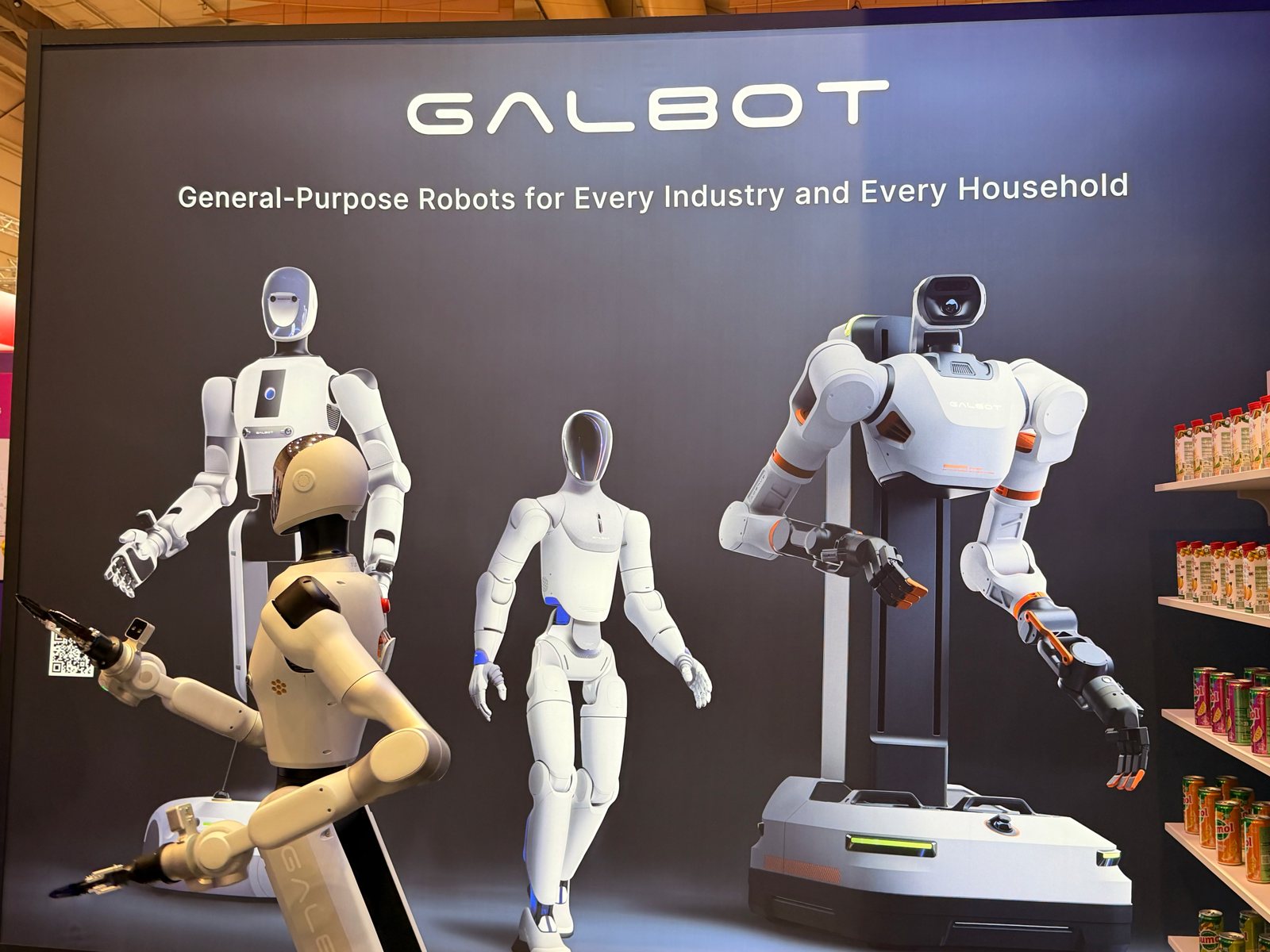
Galbot’s chief strategy officer Yuli Zhao said the Beijing company deployed more than 1,200 robots in real settings last year, runs a chain of “Galbot Store” shops operated purely by robots, and has had robots working non-stop in small pharmacy warehouses since September 2024. “Today, I’m presenting to you not just a demo technology,” she said, but “a proven and reliable solution that we have been providing into the market for over two years.”
Zhao named Bosch, Siemens, Toyota, Hyundai and the battery maker CATL among the manufacturers Galbot works with, and said Galbot’s robot had been working on a CATL assembly line for more than nine months after CATL tested “dozens of humanoids”. For Europe she pointed to partners “in Europe already”, showing a video she said Siemens had filmed itself, and to developers from Germany and Switzerland. These are company statements; we have not seen the deployments.
Xpeng Aridge: a flying car and a new self-image

Xpeng Aridge, the flying-car unit of the carmaker Xpeng, put its aircraft on Centre Stage. Founder and president Deli Zhao said his goal is that everyone can experience flying in 2028, starting in China at scenic sites and flying camps. He wants to use Web Summit to introduce the flying car to Europe and enter the European market as soon as possible. In traditional aviation China can learn from Europe’s regulator EASA, he said, but in new eVTOL aircraft China is ahead. Each market needs its own certification; Aridge is working on mutual recognition with the United Arab Emirates and South-East Asia.
At the press conference afterwards, a journalist asked whether Xpeng is still a carmaker. The answer: Xpeng should be seen as a physical AI company, with Aridge as the part that builds flying products. The company said it is looking at the US market, possibly from 2027, and that the flying car should cost less than 2 million yuan (about 250,000 euros), in line with earlier statements.
“Chinamaxxing”: Made in China, retold

On Thursday, a Centre Stage panel called “Chinamaxxing: The new era of Made in China” put the shift into words. Irene Long, chief sales officer of the Hangzhou smart-glasses maker Rokid, said that a decade ago “Made in China” meant scaling up manufacturing. Today, she said, it means “bringing innovation from China, make the product, bring new user experience from China and also make great brand from China”. Rokid had a market share of around 51 per cent in AI glasses in the first half of 2026, she said, citing Counterpoint Research — a figure we could not check — and rivals now follow standards Rokid set, such as a dual-chip design.
Nick Yu of OMOWAY, a motorbike maker founded in 2024 with research in Guangzhou, a brand centre in Singapore and production in South-East Asia, explained the supply chain with a Shenzhen joke: if you want to build a little robot, “you can actually find all the pieces of components and parts in a day in Shenzhen. Maybe not 100% true, but I think maybe more than 80% is true.” Just as important, he said, is talent: young engineers across mechanics, electronics and software who can work together.
Then the moderator raised Europe’s question: China and the EU have trade tensions, and China is accused of producing too much. Yu said a product that is “only cheap, but with no specific selling point” is not what his company wants to bring to market. Long put it more simply: “I think the user and the consumer make the decision and have a choice.” In ten years, Yu hopes “Made in China” will mean more than price: “It’s not only cheap, it’s not only quick, but it’s fun.”
The contrast with the American keynotes was striking. While Silicon Valley talked about AI that builds itself, China’s companies talked about AI that lifts boxes, fills prescriptions, flies and sits on your nose.
Theme 4 · Geopolitics
■ “Equal terms” — or “double hardball”

China’s political message came from Victor Gao of the Center for China and Globalization (CCG), a Beijing think tank close to the government. On a panel about Europe in a multipolar world he warned Germany against a tougher line: playing hardball against China would be “against the fundamental interest of the German people”, he said, pointing to Germany’s dependence on raw materials such as rare earths. Describing the Chinese government’s position, he said: “If you play hardball with me, I will play double hardball with you.” And: “China is a country to be engaged with on equal terms for mutual benefit.”
Gao speaks for a think tank, not for the government. But his message fitted the day: openness offered as a principle, by labs and by Beijing alike — with a clear warning attached.
A second panel, “The great AI migration”, showed how Europe frames the same competition. Dan Wang, China director of the Eurasia Group, said China’s AI strategy is “more about diffusion” than breakthroughs, and that “China’s biggest advantage, everybody knows, is still the supply chain”. China targets AI at manufacturing and the real economy, he said, so Europe should expect “more competition actually from China in producing things”. The real difference between the two AI ecosystems, in his view, is computing power: China chose its path “because it lacks computing power”.
Theme 5 · Europe’s answer
■ Applications, industry and data
European voices in Lisbon agreed on one thing: Europe is unlikely to lead on frontier models. Where they differed was on how much that matters.
Germany’s Parliamentary State Secretary Thomas Jarzombek said on “The great AI migration” that value moving to the US or China is “the biggest economic danger”, but that European models are “maybe 6 months behind, it’s only 6 months”. Delphine Bachmann, state councillor of the Canton of Geneva, said the real debate is “the sovereignty of the data”. Even Socher, the American, told the audience: “I do think it’s important for Europe to also have its own intelligence.”
On the Thursday, Siemens’ Peter Koerte made the industrial case in “The race for industrial AI: Can Europe win?” According to our notes, he argued that Europe will not lead on models but on applications; that Europe should turn safe industrial AI “from the very start” into a global standard; and that Siemens wants to build an industrial foundation model, showing its factory in Erlangen as an example of AI connected to machines. His answer to the session’s question was yes.
What it means
■ Five lessons for European readers
- Take the open-model offer seriously — and read the licence. Chinese open-weight models are cheap, capable and adaptable. Whether they fit depends on the licence, where they run and what they were trained to refuse.
- Expect the efficiency race to reach your devices. If ModelBest is right, capable AI will increasingly run locally in phones and cars — including cars and devices sold in Europe.
- Physical AI is where China competes hardest. Robots and vehicles carry China’s supply-chain advantage into Europe. Regulation (AI Act, machinery and aviation rules) will be the main filter.
- Openness comes with politics. The same week, labs and a government-near think tank both presented openness as China’s principle. European buyers should separate the technical offer from the geopolitical message.
- Europe’s leverage is application and trust. The European speakers bet on industrial AI, data sovereignty and safety by design. That is a strategy only if Europe also understands the Chinese tools it is competing with — and uses them where it makes sense.
What we could not verify
- Recursive’s claim that Flint beats Chinese open-source models in its category (Socher).
- Galbot’s deployment figures and named customers; we have not seen the sites.
- ModelBest’s download figure and the “Densing Law” doubling rate as a general law.
- Xpeng Aridge’s timeline for certification and for Europe; no European approval is known.
- Rokid’s market share of around 51 per cent in AI glasses (Counterpoint Research, as cited by Rokid).
What comes next
We have asked ModelBest, Galbot and Manus for interviews after the summit and will update our company profiles of MiniMax, ModelBest and Galbot with what we heard in Lisbon. All our Web Summit coverage, including the Day 1 dispatch, is on insidechinaai.com.
All our Web Summit coverage, the Chinese delegation and our interviews: Web Summit 2026 hub. The China AI Weekly, every Sunday by email: subscribe.
Reported on site at Web Summit Lisbon, 10–12 November 2026. Quotes come from our own recordings, transcribed and checked against the audio; where a line comes only from our live notes, we say so. Figures given by companies are their own claims. No company saw this report before publication. Corrections: press@insidechinaai.com · Our editorial standards.
In the directory: MiniMax · ModelBest · Galbot · UBTech · Manus — all companies
No responses yet